Technique5 min read
Why we teach the squat before we load it
Adding weight to a movement you have not learned yet is a shortcut to frustration. Here is how we build a squat that lasts.
Jonah Reyes
November 4, 2026
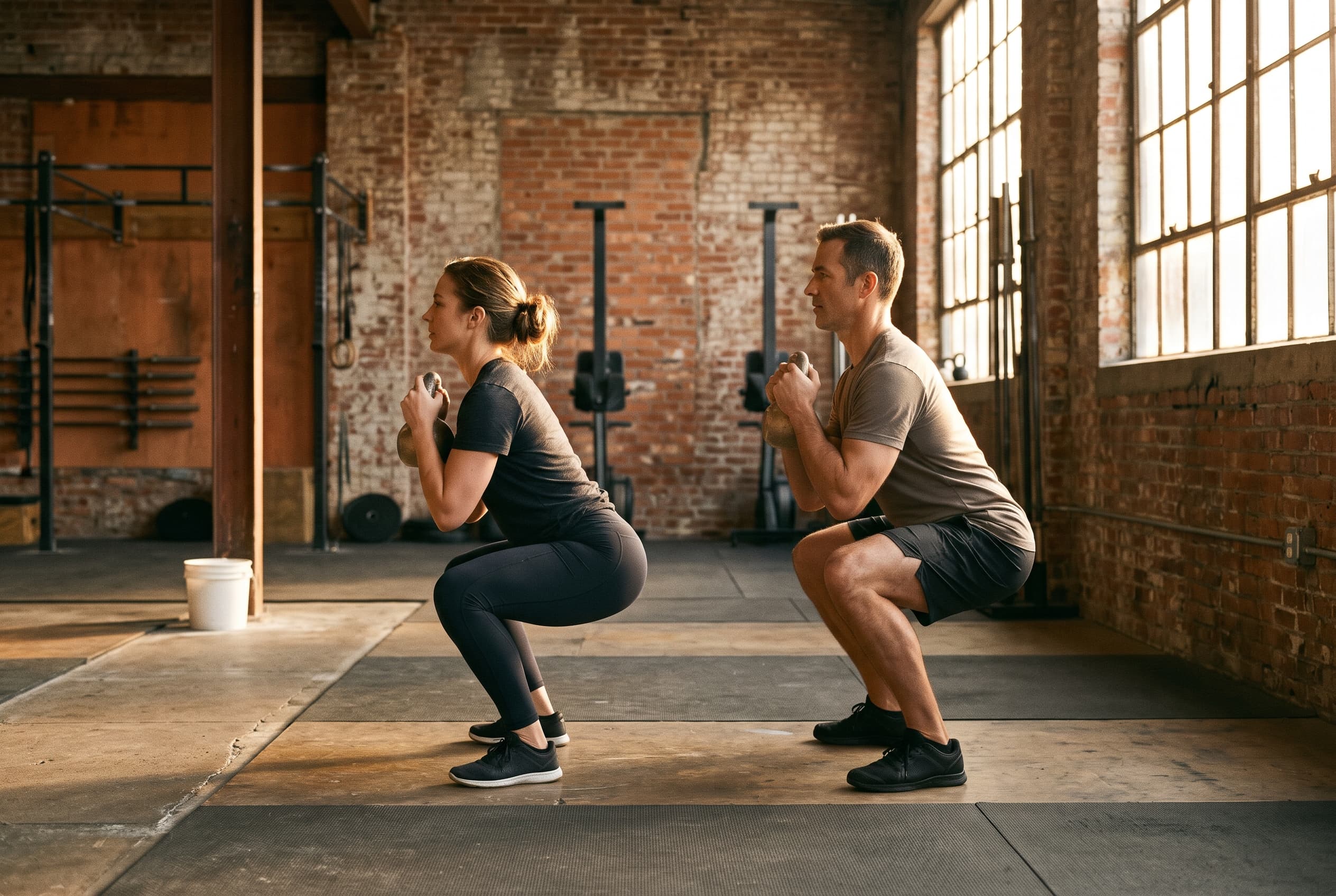
Every week someone asks why they are holding a light kettlebell when the person next to them has a barbell on their back. The answer is simple: the squat is a skill before it is an exercise, and skills are learned without much load.
Positions first
A good squat starts with where your feet are, how you brace, and where your knees go. We teach those positions with a goblet squat because holding the weight in front of you does a lot of the coaching for us. It keeps your chest tall and makes it easy to feel your balance.
Then control
Once your positions are consistent, we slow everything down. A three-second lowering phase and a pause at the bottom expose any weak spots and build strength in the range where most people get stuck.
Then load
- Week one: bodyweight and goblet squats with a pause
- Weeks two and three: tempo goblet squats with heavier bells
- Week four: your first barbell squats, coached rep by rep
It might feel slow. It is not. Members who learn this way usually pass their bodyweight squat inside a year, and they get there without the nagging knee and back pain that send most people back to the treadmill.
Put it into practice
Book your free class